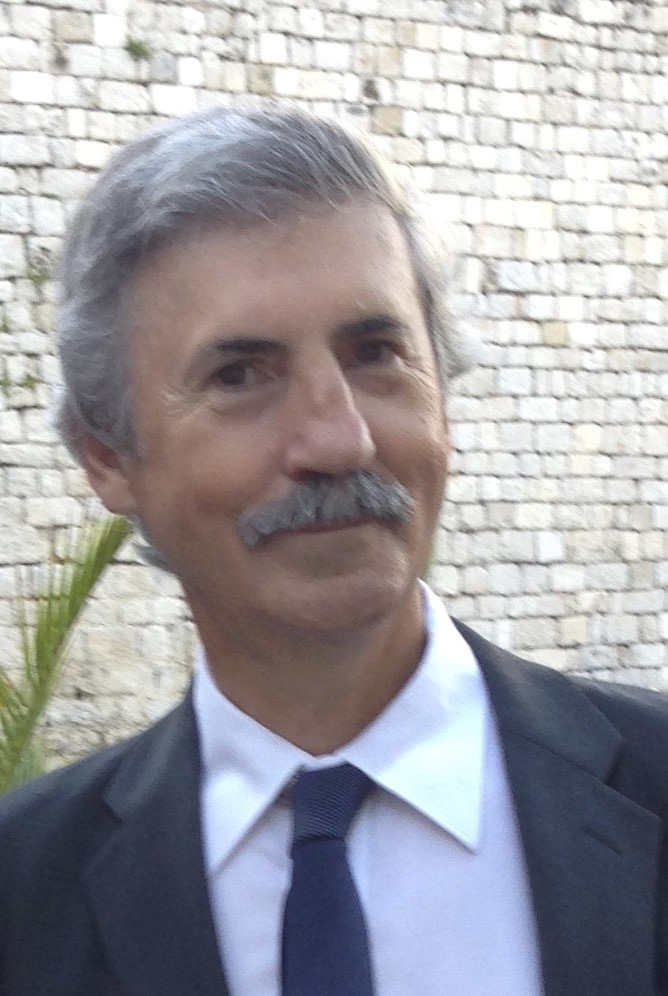
It is customary for an author to provide some personal information and a description of the motives for writing the book. I was born in 1953 in a family of seamen on a small island on the Croatian side of the Adriatic Sea. Both of my grandfathers, as well as my father, were sea captains, who worked on family owned ships or abroad on yachts after the communist abolition of private property following the Second World War. During the war, both my grandfathers were taken as hostages to Dachau concentration camp;1 my mother’s father died shortly after transfer to another camp (Flossenbürg) in 1944, while my father’s father returned home barely alive.
I finished primary school, grades 1 through 8, on the island, and then continued my secondary school education (Gymnasium) in my home city of Zadar. Communist ideology permeated the school program, although the ideological dictate was somewhat less ominous in Yugoslavia than in eastern European countries under direct Soviet domination. Marxism was the obligatory subject of study in the Gymnasium, and even at technical faculties. Officially, Marxism was defined as “the scientific worldview”, and teaching in the spirit of dialectical materialism began as early as primary school. From that period, I still remember a definition of a human being: “Man is just a group of relations, and only relations mean something.” I vividly recall my disgust with this definition after becoming aware of its monstrous implications: murder is then just cutting off a few relations from a myriad of other relations. At the Gymnasium, my interest in philosophical matters grew with my awareness of conflicts existing between the positions and values promoted by the official ideology and the values and positions resting on my Catholic family upbringing. Some of the older professors at school strived to maintain the traditional standards of education, whereas others were indifferent, or pushed the new official line. The crushing of the political movement known as the “Croatian Spring” in 1971 by the Party helped me decide not to study philosophy. To have lived in a totalitarian system, being forced to read censured texts, has this major benefit: one learns to read between the lines, to observe what should have been written about something, but is missing.
In 1972 I started my chemistry studies; I have never regretted my decision to study it at the Faculty of Natural Sciences, University of Zagreb. Most professors were excellent, and many of them organized their lectures according to textbooks then in use at American and European universities. This was especially true of organic chemistry and biochemistry, which I chose as my primary subjects. In 1975, we all were proud when a Croat with links to our Faculty, Vladimir Prelog, received the Nobel Prize in Chemistry. I graduated in 1976 and immediately began my postgraduate and then doctoral studies, completing them in 1979 with a Ph.D. degree in biochemistry from the Faculty of Food Technology and Biotechnology. Following one year of mandatory army service, and a short employment at a food company, in 1983 I began my post-doc at ETH (Eidgenössische Technische Hochschule) Zürich. There I was employed at the Institute of Biotechnology until the end of 1988, when together with colleagues we launched a biotech company. Since then and up to my retirement, I worked at private biotech companies in Switzerland and Croatia, mostly as head of R&D, and occasionally as CEO as well. My scientific fields of interest lie at the interface between chemistry and biology, and mostly deal with methods of analysis, purification and characterization of macromolecules, especially proteins and nucleic acids. I have published over thirty scientific papers and am an inventor of over fifty patents.
So, evidently, this book is written by a biochemist and inventor with an interest in philosophy. Today, in the eyes of many, this combination will appear somewhat strange; for, doesn’t a practical scientist deal with concrete objects and a philosopher with abstract ones? It is a tragedy of our time that this division has overshadowed a much deeper common ground: both science and philosophy search for truths about the world we live in. This common ground is reflected in the meaning that marks a scientific degree: Ph.D. means Doctor of Philosophy. Philosophy used to be an obligatory part of a scientist’s education; its expulsion represents a temporary victory for the false philosophy that is the major target of this book.
While studying chemistry, I never felt tensions between its fundamental philosophical premises and experimental findings. This changed while studying biochemistry and molecular biology: some experimental findings simply did not fit within the philosophical framework shaped around Darwin’s evolutionary theory. I remember how, after reading the chapter The origin of enzymes from Dixon and Webb’s classic work Enzymes,2 I reached the conclusion that the conflict between theory and data is unresolvable. Ever since, I have openly expressed this conclusion to everyone who wanted to hear it, and I have continuously followed scientific attempts aimed at resolving this problem, including disputes between defenders of the evolutionary theory and proponents of intelligent design. In 2009, my friend from my days at ETH, Matti Leisola, asked me what I thought about the idea of launching a scientific journal favorable to intelligent design, of which he would be the editor-in-chief; and in case of my positive opinion, whether I would join the editorial board. I favored the idea, and after some time, submitted a manuscript to BIO- Complexity entitled Proteins and genes, singletons and species.3 Other editors rejected it, for philosophical reasons, in my judgement. Then four years later, Matti and I wrote another paper, Have scientists already been able to surpass the capabilities of evolution? 4, which was again rejected for philosophical reasons. That experience catalyzed the writing of this book.
1 Kersto Goidanich, Number 61843; Zazmaria Cosulich, Number 61839 (names Italianized).
2 Dixon, M., & Webb, E. C. (1964). Enzymes, 950 pp. Academic Press, New York.
3 Kozulic, B. Proteins and genes, singletons and species, http://vixra.org/abs/1105.0025, submitted on May 16, 2011.
4 Kozulic B., M. Leisola. Have scientists already been able to surpass the capabilities of evolution? viXra:1504.0130, submitted on April 17, 2015.